
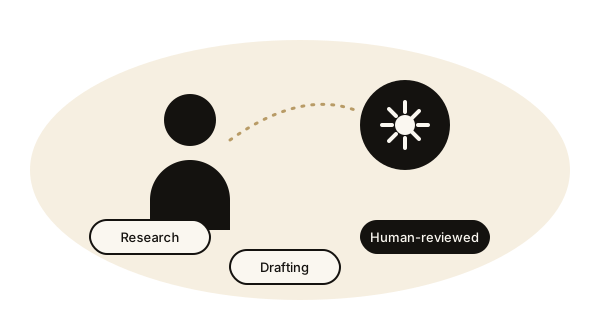
When you hire a bookkeeper, you can choose an employee, a bookkeeping firm or a remote bookkeeping assistant. Pick by how much work you have, how much oversight you want and the software you use. Start with one monthly task, such as reconciliation, before handing over more.
When you hire a bookkeeper, you are choosing who keeps your numbers current. There are three main routes: an employee, a bookkeeping firm or a remote assistant. Each has a place. This guide helps you pick by workload, oversight and cost.
When to hire a bookkeeper
It is time when the books take hours you need for the business. Signs include unsorted receipts, late invoices and a scramble before each tax deadline. If this sounds like you, hire a bookkeeper before the backlog grows.
Option 1: hire a bookkeeper as an employee
An employee gives you full control and daily availability. It also adds salary, leave and payroll costs. That is often too much for a small business with a few hours of bookkeeping a week.
Option 2: a bookkeeping firm
A firm usually charges a flat monthly fee for a set scope. It suits stable, predictable needs. Check what is included and what costs extra.
Option 3: a remote bookkeeping assistant
A remote bookkeeping assistant works in your software, such as QuickBooks, Xero or spreadsheets, and is billed by the hour. It suits a part time bookkeeper need: invoicing, reconciliation, expense tracking and a monthly close checklist. Read our guide to virtual assistant bookkeeping services.
What to check before you hire
- Which software will they use?
- Who reviews the work before you see it?
- What happens when they are away at month end?
- How is access to your accounts controlled?
- Does your accountant agree with the process?
A bookkeeper keeps records current. Tax advice and compliance belong with a qualified accountant, so keep yours in the loop.
Want to test bookkeeping support? See our bookkeeping service or start for $1.
Frequently asked questions
When should I hire a bookkeeper?
When keeping the books takes hours you should spend on the business, or when receipts and invoices start to pile up.
Do I need a bookkeeper or an accountant?
A bookkeeper keeps records current. An accountant advises on tax and strategy. Many businesses use both.
Can a virtual assistant do bookkeeping?
A virtual assistant can handle bookkeeping support such as invoicing, reconciliation and expense tracking in your software. Ask your accountant about tax and compliance.
What is doing this yourself costing you?
Doing it yourself: $2,165 a month of your time.
The same hours at our $12/hr pay-as-you-go rate: $520. Dedicated plans start at $5.62/hr.
Simple maths from the numbers you enter. It assumes a VA can take on those hours.
Start for $1Written by the MyRemoteVA team. Search-trend figures come from Google Trends. Prices shown are our current plans. Last updated September 30, 2026. Questions or corrections? Contact us.
Bookkeeping & Data Entry
A bookkeeping virtual assistant for invoicing, reconciliation, expense tracking and clean spreadsheets — so your books are never the thing you're scrambling to fix at tax time.
Explore this service