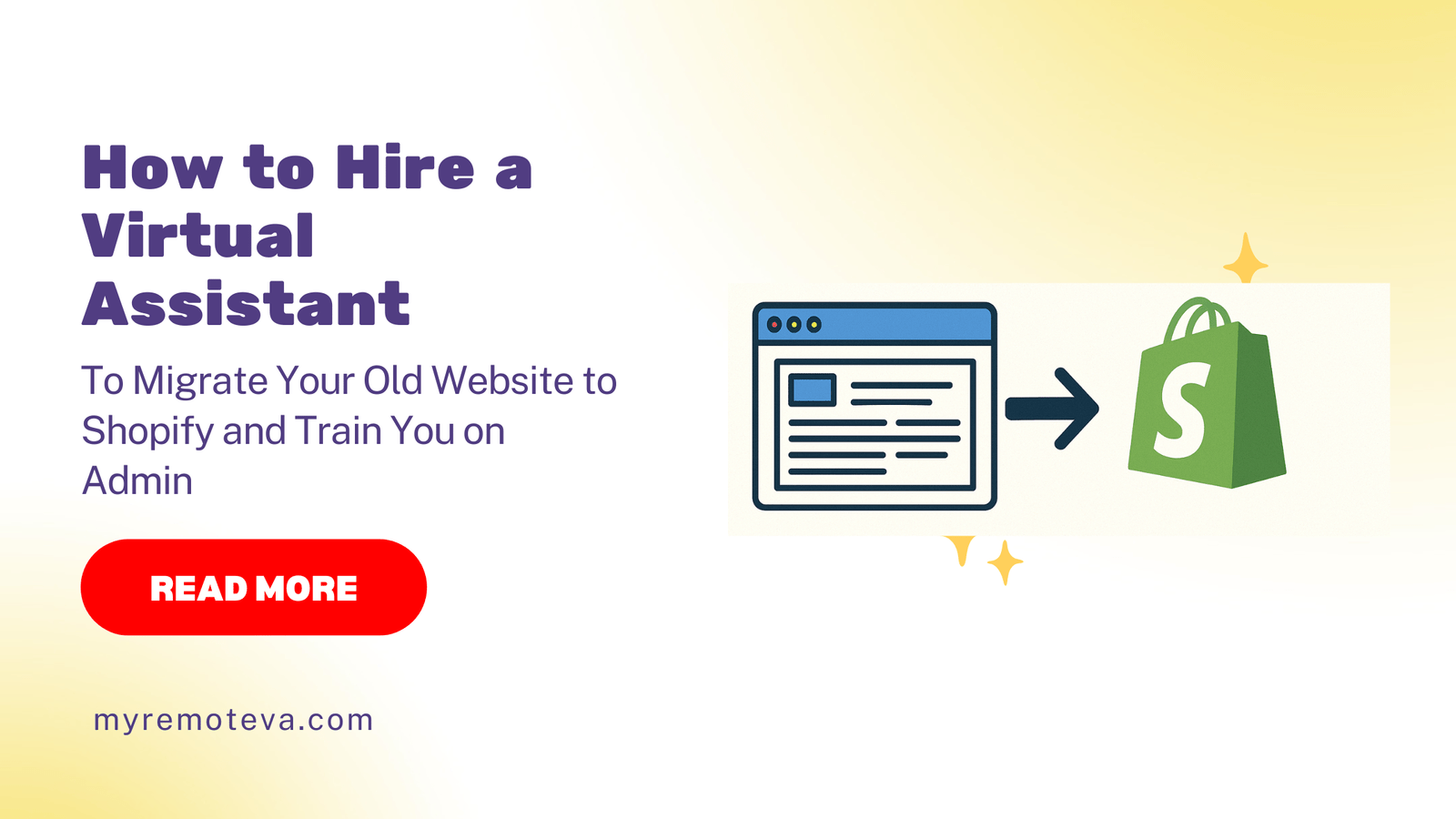
How to Hire a Virtual Assistant to Migrate Your Old Website to Shopify and Train You on Admin
Migrating your website to Shopify and learning the platform’s administration can feel overwhelming. Hiring a virtual assistant (VA) can streamline this process and empower you to manage your online store effectively. Here’s how to find the right VA for the job:
- How to Hire a Virtual Assistant to Migrate Your Old Website to Shopify and Train You on Admin
- 1. Understanding Your Needs and Defining the Scope
- 2. Finding the Right Virtual Assistant
- 3. Interview Questions to Ask Potential VAs
- 4. Onboarding and Managing Your Virtual Assistant
- 5. Addressing Common Challenges
- 6. Recent Market Signals (USA, UK, New Zealand, Singapore, Australia, UAE - Last Month)
- FAQ: Hiring a Virtual Assistant for Shopify Migration and Training
- What is the Average Cost of Hiring a VA for Shopify Migration and Training?
- How Long Does a Typical Website Migration to Shopify Take?
- What security measures should I take when granting access to my Shopify store?
- How Do I Ensure Effective Communication with my VA, Especially with Time Zone Differences?
- What if I'm Not Satisfied with the VA's Work?
- Can a VA help me with Shopify SEO?
- What are the Benefits of Migrating to Shopify?
1. Define Your Scope and Requirements
Before you start searching, clarify your needs. This includes:
* **Specific migration tasks:** What type of website are you migrating (e.g., WordPress, Squarespace)? Do you need help with product import, data transfer, or theme customization?* **Shopify admin training needs:** What aspects of Shopify admin do you need training on (e.g., product management, order fulfillment, marketing integrations)?* **Technical skills required:** Do you need a VA with experience in specific coding languages (HTML, CSS, Liquid) or Shopify apps?* **Communication style:** How often do you want updates? What is your preferred communication method (e.g., email, Slack)?
2. Source Potential Virtual Assistants
Look for VAs specializing in Shopify website migration and admin training. Consider these avenues:
* **VA platforms:** Many platforms connect businesses with skilled virtual assistants. Read reviews and check VA profiles to find candidates with relevant experience.* **Freelance websites:** These sites offer a broad pool of talent, allowing you to filter by skills and experience.* **Referrals:** Ask your network for recommendations. A personal referral can provide valuable insights into a VA’s reliability and work ethic.
3. Evaluate Candidates Carefully
Once you have a shortlist, assess each candidate based on:
* **Experience:** Has the VA successfully migrated websites to Shopify before? Do they have proven experience in training clients on Shopify admin?* **Technical skills:** Does the VA possess the necessary technical skills (e.g., HTML, CSS, Liquid) for your specific migration needs?* **Communication skills:** Can the VA communicate clearly and effectively, both verbally and in writing?* **Problem-solving skills:** Can the VA think critically and solve problems independently?
4. Onboarding and Training Your VA
Once you’ve hired a VA, provide clear instructions and resources:
* **Detailed instructions:** Outline the migration process step-by-step.* **Access to necessary accounts:** Grant the VA access to your old website, Shopify store, and relevant tools.* **Regular check-ins:** Schedule regular check-ins to monitor progress, answer questions, and provide feedback.* **Training resources:** Provide the VA with access to Shopify documentation and other relevant training materials.
5. Leverage Expert VA Support
Consider engaging a virtual assistant service that provides expert support and management. These services often offer flexible hourly or team-based plans. You can delegate admin, tech, or marketing tasks and focus on your core business. A supervisor can also manage your VA, shift, processes, and reporting, saving you even more time.
1. Understanding Your Needs and Defining the Scope
Before you dive into hiring a virtual assistant (VA) to migrate your website to Shopify and provide admin training, it’s crucial to clearly define your project scope. This foundational step ensures a smooth transition and prevents unexpected costs or delays.
Key Questions to Consider:
- What is the current platform of your old website? (e.g., WordPress, Wix, custom-built) This will impact the complexity of the migration.
- How many products/pages need to be migrated? A larger website naturally requires more time and effort.
- What is the desired timeline for the migration? Setting realistic deadlines is essential for managing expectations.
- What level of Shopify admin training do you need? Are you starting from scratch, or do you have some existing knowledge? Consider topics like product management, order fulfillment, theme customization, and app integration.
- What specific admin tasks will you need the VA to handle long-term? This helps identify the necessary skill set.
- Do you require any custom design or development work beyond the standard migration? Examples include creating custom templates, integrating specific apps, or optimizing the website for SEO.
Documenting your requirements in detail will help you communicate effectively with potential VAs and ensure they can meet your needs. For example, if your website has over 500 products, that should be explicitly stated.
The Importance of a Well-Defined Scope
A well-defined scope allows the VA to provide an accurate estimate of the time and cost involved. It also helps prevent scope creep, where the project gradually expands beyond the initial agreement, leading to increased expenses and potential frustration.
Consider that factors such as the complexity of your website’s design, the data structure of your current content management system, and the level of customization required in Shopify all play a role in determining the overall project timeline and cost. Take the time upfront to thoroughly assess your needs and communicate them clearly.
2. Finding the Right Virtual Assistant
Migrating a website and learning a new platform like Shopify requires a virtual assistant with a specific skillset. You need someone comfortable with website migration processes, Shopify’s admin interface, and ideally, someone who can provide clear and effective training.
Key Skills to Look For
When searching for your ideal virtual assistant, prioritize candidates with proven experience in the following areas:
- Website Migration Experience: Look for experience migrating websites from different platforms to Shopify. Ask about the types of sites they’ve worked with (e.g., WordPress, Wix, custom-built sites).
- Shopify Expertise: They should have a strong understanding of Shopify’s features, settings, and ecosystem. This includes familiarity with themes, apps, and basic coding (HTML/CSS/Liquid).
- Admin & Training Skills: The VA needs to be able to clearly explain Shopify’s admin panel and train you on managing your store. Look for candidates with excellent communication skills and a patient, methodical approach to teaching.
- Technical Proficiency: A basic understanding of domain name management, DNS records, and hosting is beneficial.
- Problem-Solving: Website migrations rarely go perfectly. Your VA should be a resourceful problem-solver who can troubleshoot issues and find creative solutions.
Where to Find Virtual Assistants
Several platforms connect businesses with qualified virtual assistants. Consider these options:
- Freelance Platforms: Platforms like Upwork and Fiverr host a wide range of freelance virtual assistants with varying skill sets and pricing.
- Specialized VA Agencies: Agencies often specialize in specific types of virtual assistance, such as website development or e-commerce support. This can increase your chances of finding a VA with the precise skills you need.
- Referrals: Ask your network if they can recommend a reliable virtual assistant with Shopify experience.
Interviewing Potential Candidates
Once you’ve identified a few potential candidates, schedule interviews to assess their qualifications and communication style. Prepare specific questions to gauge their experience with website migrations and Shopify.
Consider asking them to describe a past website migration project, the challenges they faced, and how they overcame them. Also, ask how they would approach training you on Shopify’s admin panel.
Setting Clear Expectations
Before hiring a virtual assistant, clearly define your expectations, including the scope of work, deadlines, communication frequency, and budget. This will help ensure a smooth and successful working relationship. A well-defined scope can ensure your VA understands the goals and what is expected from them.
3. Interview Questions to Ask Potential VAs
Finding the right virtual assistant for your website migration and Shopify training requires a thorough interview process. Focus on questions that assess their technical skills, communication abilities, and teaching aptitude. Here are some key areas to explore:
Technical Proficiency
Gauge their hands-on experience with Shopify and website migration. Look for specific examples and a clear understanding of the processes involved.
- What is your experience with Shopify, specifically with setting up stores, importing products, and configuring payment gateways?
- Describe your experience migrating websites from different platforms to Shopify. What challenges have you faced, and how did you overcome them?
- Are you familiar with Shopify apps and plugins relevant to my business (e.g., SEO, email marketing, product reviews)?
- How do you ensure data integrity during a website migration? What backup and restore procedures do you follow?
Training and Communication Skills
Since you need training on Shopify admin, assess their ability to explain complex topics clearly and patiently. Their communication style should align with your learning preferences.
- Describe your experience training others on new software or platforms. What teaching methods do you find most effective?
- How would you approach teaching me the Shopify admin panel, assuming I have limited prior experience?
- How do you handle a student who is struggling to understand a concept?
- Can you provide examples of how you’ve explained technical concepts in a simple, easy-to-understand way?
- What is your preferred method of communication (e.g., video calls, screen sharing, email)?
Project Management and Problem-Solving
Website migration is a project that requires planning, organization, and problem-solving. Evaluate their ability to manage tasks effectively and handle unexpected issues.
- How would you approach a website migration project from start to finish? What are the key milestones and timelines?
- How do you handle unexpected technical issues that arise during a website migration?
- Can you provide examples of how you’ve successfully managed a similar project in the past?
- What strategies do you use to stay organized and manage multiple tasks simultaneously?
Understanding of Your Business
A good VA will take the time to understand your business and its specific needs. This will help them tailor the migration and training process to your requirements.
- What questions do you have about my business, target audience, and website goals?
- How would you ensure the Shopify store is optimized for my specific target audience?
- How would you approach SEO optimization for my new Shopify store during and after the migration?
4. Onboarding and Managing Your Virtual Assistant
Once you’ve selected the right virtual assistant (VA) for your Shopify migration and training, a smooth onboarding process is crucial for success. Clear communication and well-defined expectations will set the stage for a productive working relationship.
Clear Communication is Key
From the start, establish clear communication channels. This might include:
- Regular Check-ins: Schedule daily or weekly check-ins to discuss progress, address roadblocks, and provide feedback.
- Preferred Communication Methods: Determine the best way to communicate (e.g., email, project management software, video calls).
- Documentation: Encourage your VA to document processes and decisions to ensure knowledge transfer and consistency.
Defining Roles and Responsibilities
Ensure your VA fully understands their responsibilities related to the Shopify migration and admin training. This includes:
- Migration Scope: Clearly define the scope of the website migration, including specific pages, products, and data to be transferred.
- Training Objectives: Outline the specific Shopify admin skills you want to learn (e.g., product management, order fulfillment, marketing automation).
- Timeline: Establish a realistic timeline for completing the migration and training process.
Project Management Tools
Using project management tools can significantly streamline the migration process and ensure tasks are completed on time. These tools facilitate:
- Task Assignment: Easily assign specific tasks to your VA.
- Progress Tracking: Monitor the progress of each task and the overall project.
- File Sharing: Securely share important documents and resources.
Feedback and Performance Monitoring
Regular feedback is essential for continuous improvement. Provide constructive criticism and praise to motivate your VA and ensure they’re meeting your expectations.
Consider using performance metrics to track progress. For example:
- Migration Completion Rate: Track the percentage of website content successfully migrated to Shopify.
- Training Comprehension: Assess your understanding of Shopify admin functions through quizzes or practical exercises.
- Task Completion Time: Monitor the time it takes your VA to complete specific tasks.
Remember, investing time in onboarding and managing your VA will ultimately save you time and resources in the long run.
5. Addressing Common Challenges
Migrating your old website to Shopify and learning the platform’s admin can present challenges. Here’s how a virtual assistant can help navigate these hurdles:
Data Migration Complexities
Moving product information, customer data, and blog content from your old website to Shopify requires careful planning and execution. Inaccurate data transfer can lead to lost sales and customer frustration. A virtual assistant experienced in website migration can ensure a smooth and accurate transfer, mapping fields correctly and validating the data’s integrity.
Theme Customization and Design
Shopify offers a wide range of themes, but customizing them to match your brand’s identity can be time-consuming. A virtual assistant with design skills can help you choose the right theme, customize its appearance, and ensure your website looks professional and appealing. They can also help with creating or adapting graphics and other visual elements.
Shopify Admin Training and Ongoing Support
Learning the ins and outs of Shopify’s admin panel takes time and effort. A virtual assistant can provide personalized training, guiding you through the various features and functionalities. They can also offer ongoing support, answering your questions and troubleshooting any issues you encounter. This includes managing products, orders, customer data, and marketing campaigns.
Time Commitment and Expertise
Migrating a website and mastering a new platform takes significant time and expertise. Delegating these tasks to a virtual assistant frees up your time to focus on core business activities. A skilled virtual assistant brings the necessary knowledge and experience to ensure a successful migration and efficient website management.
Consider your specific needs and choose a virtual assistant with the right skillset and experience. Remember that clear communication and well-defined tasks are crucial for a successful collaboration.
6. Recent Market Signals (USA, UK, New Zealand, Singapore, Australia, UAE – Last Month)
Demand for virtual assistants skilled in website migration to Shopify and admin training remains strong across key markets. Several factors are driving this trend:
- Growing eCommerce Landscape: Businesses continue to shift towards online sales, making a well-optimized Shopify store crucial. This creates a need for expertise in migrating existing websites and managing the Shopify platform.
- Time Constraints for Business Owners: Small business owners and startups are often strapped for time. Delegating website migration and training to a virtual assistant allows them to focus on core business activities.
- Cost-Effectiveness: Hiring a virtual assistant can be more affordable than hiring a full-time employee, especially for tasks like website migration which are often project-based.
- Need for Ongoing Support: Beyond the initial migration, businesses require ongoing support for website maintenance, content updates, and troubleshooting. Virtual assistants can provide this ongoing assistance.
Specific signals observed in the last month include:
Observed Market Trends:
- Increased Search Volume: Search queries related to “Shopify virtual assistant,” “website migration VA,” and “Shopify admin training” have shown a noticeable uptick in the USA, UK, Australia, and Singapore.
- Project Based Demand: Interest in hourly based virtual assistant service plans has been increased.
- Freelance Platform Activity: Freelance platforms are seeing increased activity for Shopify migration projects, with businesses actively seeking virtual assistants with relevant experience.
FAQ: Hiring a Virtual Assistant for Shopify Migration and Training
What are the benefits of hiring a virtual assistant for Shopify migration?
Migrating a website to Shopify can be a complex and time-consuming process. A virtual assistant specializing in Shopify can handle the technical aspects, such as data transfer, theme customization, and app integration. This allows you to focus on your business’s core operations without getting bogged down in the details. Plus, a VA can ensure a smooth transition, minimizing downtime and potential errors.
What kind of training can a virtual assistant provide on Shopify admin?
A knowledgeable virtual assistant can train you on all aspects of the Shopify admin panel. This includes setting up products, managing inventory, processing orders, creating discounts, and generating reports. They can also guide you through customizing your store’s design, installing apps, and optimizing your store for search engines. The training can be tailored to your specific needs and skill level, ensuring you’re comfortable managing your store independently.
What tasks can I delegate to a virtual assistant after the Shopify migration and training?
Once your Shopify store is up and running, you can delegate a wide range of tasks to your virtual assistant. These may include:
- Product listing and management
- Order fulfillment and customer service
- Inventory management
- Social media marketing
- Email marketing
- Content creation (blog posts, product descriptions)
- SEO optimization
- Website maintenance and updates
What skills should I look for in a virtual assistant for Shopify migration and training?
When hiring a virtual assistant for this purpose, look for the following skills:
- Proficiency in Shopify platform
- Experience with website migration
- Strong understanding of e-commerce principles
- Excellent communication and training skills
- Attention to detail
- Problem-solving abilities
How much does it cost to hire a virtual assistant for Shopify migration and training?
The cost varies depending on the virtual assistant’s experience, location, and the scope of the project. Some virtual assistant services, offer flexible hourly and team-based plans. You can often choose from curated Hourly Monthly Plans or build a team with Dedicated Plans, for 80 hours, or for 160 hours, or multi-VA setups. If you’re not ready to commit yet, there might be plans which gives you free hour every month with task support and rollover benefits. Obtaining quotes from several VAs and clearly outlining your project requirements is recommended.
What is the Average Cost of Hiring a VA for Shopify Migration and Training?
The cost of hiring a virtual assistant (VA) to migrate your old website to Shopify and train you on its admin functionalities can vary significantly based on several factors:
- VA’s Experience and Skill Level: More experienced VAs with a proven track record of successful Shopify migrations and training will typically command higher rates.
- Complexity of the Website Migration: A simple website with few products will be less expensive to migrate than a complex e-commerce platform with numerous products, variations, customer data, and integrations.
- Scope of Training Required: The amount of training you require on the Shopify admin panel will influence the overall cost. If you need comprehensive training covering all aspects of Shopify, including product management, order fulfillment, marketing tools, and analytics, the cost will be higher.
- Hourly vs. Fixed-Price Model: Some VAs charge an hourly rate, while others offer a fixed-price quote for the entire project. Hourly rates offer flexibility, while fixed-price quotes provide cost certainty.
- Geographic Location of the VA: VAs located in countries with lower costs of living may offer more competitive rates.
- Plan type: You can delegate admin, tech, customer support, marketing, creative tasks, or executive work — and a Dedicated Supervisor manages your VA, shift, processes, and reporting so you don’t have to. Choose from curated Hourly Monthly Plans of (5, 10, 20, 30 hours) or build a team with Dedicated Plans, for 80 hours, or for 160 hours, or multi-VA setups.
Generally, you can expect to pay anywhere from $15 to $50+ per hour for a skilled VA capable of handling Shopify migration and training. For a complete website migration and training package, costs could range from a few hundred dollars to several thousand dollars, depending on the project’s complexity.
It’s advisable to obtain quotes from multiple VAs or VA services, detailing the scope of work, estimated hours, and payment terms, before making a hiring decision. Consider exploring services which provide expert virtual assistant support for startups, founders, agencies, and busy professionals through flexible hourly and team-based plans.
How Long Does a Typical Website Migration to Shopify Take?
The timeline for migrating your old website to Shopify can vary quite a bit depending on several factors. There’s no one-size-fits-all answer, but understanding these influencing factors will help you set realistic expectations.
Factors Affecting Migration Time
- Website Complexity: A simple website with a few pages and products will migrate much faster than a complex e-commerce site with thousands of products, intricate designs, and custom integrations.
- Data Volume: The amount of data that needs to be transferred, including product details, customer information, blog posts, and images, directly impacts the time required.
- Data Quality: If your existing data is poorly organized, incomplete, or inconsistent, it will take longer to clean and prepare it for import into Shopify.
- Design Customization: Implementing a highly customized design on Shopify requires more time and effort than using a standard theme.
- Platform of Origin: Migration from some platforms is more straightforward than from others. Some platforms have tools that facilitate the process.
- Virtual Assistant’s Experience: An experienced Shopify virtual assistant familiar with website migrations will complete the task faster and more efficiently.
General Time Estimates
While these are just estimates, they offer a general idea:
- Small Website (1-10 products/pages): 1-2 weeks
- Medium Website (11-100 products/pages): 2-4 weeks
- Large Website (100+ products/pages): 4+ weeks
Remember that these timelines are approximate and can be affected by unforeseen challenges. It’s best to discuss your specific website and requirements with your virtual assistant to get a more accurate estimate.
When delegating this task to a virtual assistant, it’s also important to consider the time allocated for training you on Shopify admin. This will add to the overall project timeline.
What security measures should I take when granting access to my Shopify store?
Granting access to your Shopify store to a virtual assistant requires careful consideration of security protocols. It’s crucial to balance accessibility with protecting your sensitive business data.
Principle of Least Privilege
Apply the principle of least privilege. This means granting your VA only the permissions they absolutely need to perform their specific tasks. For migrating your website and providing admin training, they likely won’t need full administrative access.
Shopify Staff Accounts and Permissions
Utilize Shopify’s staff account system. Don’t share your personal account credentials. Create a separate staff account for your VA and meticulously configure the permissions. You can granularly control access to different areas of your store, such as products, orders, reports, and settings.
Two-Factor Authentication (2FA)
Strongly encourage or require your VA to enable two-factor authentication on their staff account. This adds an extra layer of security, making it much harder for unauthorized individuals to access your store even if they obtain the password. 2FA requires a secondary verification method, such as a code sent to their phone or an authenticator app, in addition to their password.
Regular Password Updates
Implement a policy of regular password updates for all staff accounts. Consider using a password manager to generate strong, unique passwords for each account.
Monitor Account Activity
Regularly review the activity logs associated with your VA’s staff account. This allows you to monitor their actions and identify any suspicious or unauthorized behavior. Shopify provides activity logs within the admin panel.
VPN Consideration
Consider requiring your VA to use a VPN (Virtual Private Network) when accessing your Shopify store, especially if they are working remotely from a public Wi-Fi network. A VPN encrypts their internet traffic, making it more difficult for hackers to intercept sensitive information.
Clear Communication and Expectations
Establish clear communication channels and expectations with your VA regarding data security and confidentiality. Outline acceptable use policies and the consequences of violating these policies.
Revoke Access Promptly
Immediately revoke your VA’s access to your Shopify store when their work is completed or their contract ends. This is a crucial step in preventing unauthorized access to your store’s data in the future.
How Do I Ensure Effective Communication with my VA, Especially with Time Zone Differences?
Effective communication is crucial for a successful virtual assistant relationship, especially when dealing with different time zones. A well-communicated project, like migrating your website to Shopify and training you on the admin side, ensures that your VA understands your expectations and can deliver efficiently.
Strategies for Seamless Communication:
- Establish Clear Communication Channels: Choose a primary communication channel (e.g., Slack, email, project management software) and stick to it. This helps avoid scattered information and ensures everyone is on the same page.
- Set Expectations Upfront: Clearly define communication frequency, response times, and preferred methods. Discuss how urgent requests should be handled and how to address potential communication breakdowns.
- Utilize Project Management Tools: Employ a project management tool like Asana, Trello, or Monday.com to track progress, assign tasks, share files, and communicate within the context of specific tasks. This enhances transparency and accountability.
- Schedule Overlapping Time: Even with time zone differences, try to schedule a short overlap for real-time communication. This can be used for initial briefings, quick check-ins, or addressing urgent issues.
- Document Everything: Detailed documentation is key. Create clear briefs, instructions, and tutorials, particularly for Shopify admin training. This minimizes back-and-forth communication and allows your VA to work independently.
- Regular Check-ins and Feedback: Schedule regular check-ins, even if they’re brief, to review progress, provide feedback, and address any questions or concerns. Constructive feedback helps your VA improve and ensures the project stays on track.
- Be Mindful of Time Zone Etiquette: Respect your VA’s working hours and avoid sending messages outside those hours unless it’s truly urgent. Consider using scheduling tools to send messages at appropriate times.
By implementing these strategies, you can overcome communication challenges associated with time zone differences and foster a productive working relationship with your virtual assistant. Remember, clear and consistent communication is the foundation of a successful collaboration. If you’re still not ready to commit yet, start with the Forever Free Plan, which gives you 1 free hour every month with task support and rollover benefits.
What if I’m Not Satisfied with the VA’s Work?
It’s crucial to address the possibility of dissatisfaction upfront. While we strive to provide highly skilled and reliable virtual assistants, sometimes things don’t work out as planned. Here’s what you can expect when it comes to addressing concerns and ensuring you get the support you need for your website migration and training.
Clear Communication is Key
The first step is always to communicate your concerns clearly and directly to the VA. Be specific about what isn’t meeting your expectations, whether it’s related to the Shopify migration progress, the quality of the training, or any other aspect of their performance. Providing concrete examples will help them understand the issue and make necessary adjustments.
Addressing Performance Issues
We understand that you may not have the time or expertise to micromanage your VA. That’s why a Dedicated Supervisor manages your VA, shift, processes, and reporting, so you don’t have to. They will work with the VA to understand the challenges and implement solutions to improve their performance. This could involve additional training, revised processes, or a change in approach.
Potential Resolutions
Depending on the nature and severity of the issue, several resolutions may be possible:
- Revised Task Instructions: Perhaps the initial instructions weren’t clear enough. Refining the task requirements can help the VA better understand your expectations.
- Additional Training: If the VA lacks specific knowledge or skills, we can provide additional training to address the gaps. This is particularly relevant for Shopify admin training.
- Task Reassignment: In some cases, it may be more efficient to reassign specific tasks to a different VA with more relevant experience.
- Replacement VA: If performance doesn’t improve despite efforts to address the issue, we will work with you to find a more suitable VA who can meet your needs. Our goal is to ensure you receive the quality of support you expect and deserve.
We are committed to your satisfaction and will work diligently to resolve any issues that arise during your project. Your feedback is valuable and helps us continuously improve our services.
Can a VA help me with Shopify SEO?
Absolutely! A virtual assistant can be a valuable asset for improving your Shopify SEO. While you’re focused on migrating your website and learning the Shopify admin panel, your VA can handle many SEO tasks, freeing up your time and helping your new store rank higher in search results.
Here are some ways a VA can contribute to your Shopify SEO:
- Keyword Research: Identifying relevant keywords to target based on your products and target audience. This involves researching search volume, competition, and user intent.
- On-Page Optimization: Optimizing product descriptions, meta descriptions, title tags, and image alt text to include relevant keywords and improve search engine visibility.
- Content Creation: Developing blog posts, articles, and other types of content that are both informative and optimized for search engines. High-quality content can attract more organic traffic and establish your store as an authority in your niche.
- Technical SEO: Addressing technical aspects of your Shopify store that can impact SEO, such as site speed, mobile-friendliness, and schema markup.
- Link Building: Building high-quality backlinks from other websites to improve your store’s authority and ranking in search results.
- Competitor Analysis: Analyzing your competitors’ SEO strategies to identify opportunities for improvement and stay ahead of the curve.
- SEO Reporting and Analysis: Monitoring your SEO performance using tools like Google Analytics and Google Search Console, and providing regular reports on key metrics. Your VA can also analyze the data to identify trends and make recommendations for improvement.
With a Dedicated Supervisor overseeing their work, your VA can ensure consistent SEO implementation. Delegating these tasks to a VA allows you to focus on running your business while your SEO efforts are continuously improving your store’s visibility and driving more traffic.
What are the Benefits of Migrating to Shopify?
Migrating your old website to Shopify can unlock a wealth of advantages for your business, streamlining your operations and potentially boosting your sales. Here’s a look at some key benefits:
Enhanced E-commerce Functionality
Shopify is a platform built specifically for e-commerce. This means you’ll gain access to a robust suite of features designed to help you sell online, including:
- Simplified Product Management: Easily add, edit, and organize your products with intuitive tools.
- Secure Payment Processing: Shopify integrates with various secure payment gateways, giving your customers peace of mind.
- Inventory Management: Keep track of your stock levels and automate restocking notifications.
- Shipping Integrations: Connect with major shipping carriers for streamlined order fulfillment.
Improved Website Performance and Security
Shopify handles the technical aspects of running an e-commerce website, ensuring optimal performance and security. You benefit from:
- Fast Loading Speeds: Shopify’s infrastructure is optimized for speed, providing a better user experience.
- Automatic Security Updates: Shopify takes care of security updates, protecting your website from vulnerabilities.
- Reliable Uptime: Shopify guarantees high uptime, ensuring your website is always accessible to customers.
Scalability and Growth Potential
Shopify is designed to scale with your business. Whether you’re just starting out or experiencing rapid growth, Shopify can handle the increasing demands. This scalability is crucial for long-term success and allows you to focus on growing your business without worrying about technical limitations.
Marketing and Sales Tools
Shopify offers a wide range of built-in marketing and sales tools to help you reach more customers and increase conversions, including:
- SEO Optimization: Built-in features to improve your website’s search engine ranking.
- Email Marketing Integration: Connect with popular email marketing platforms to nurture leads and promote products.
- Social Media Integration: Easily share your products and promotions on social media.
- Discount Codes and Promotions: Create custom discounts and promotions to attract customers.
Ease of Use and Management
Shopify’s user-friendly interface makes it easy to manage your online store, even if you don’t have technical expertise. With the right virtual assistant training you can take control of this and grow your brand.